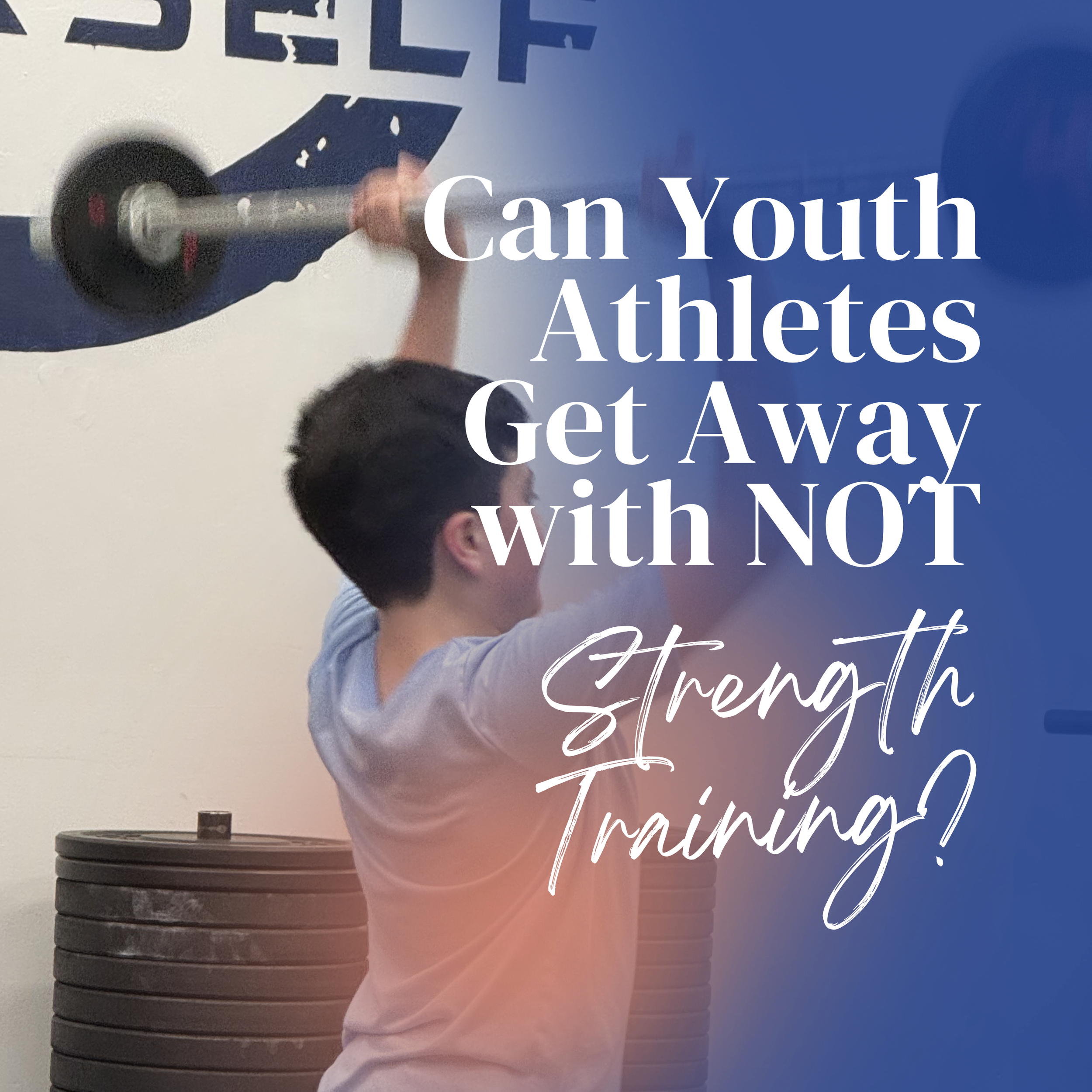
Can Youth Athletes Get Away with not Strength Training?
The research is clear, weight training for youth should be considered a non-negotiable. Here are five big reasons why youth athletes as young as 8 years old should be weight training.
TLDR
The real risk in weight training for a young person is in not doing it.
Resistance, weight, and strength training are similar but not synonymous.
Lifting weights will stunt a child’s growth or injure them are two antiquated myths.
Five key reasons kids should strength train: physical literacy, bone density, confidence, mental toughness, and hormonal adaptations.
Always learn to lift with a professional.
In the words of Brian Kight,
“It's never been easier or faster to get answers. ‘I don't know what to do’ stopped being a valid excuse the day the internet arrived. Now in the AI era, it's a willful choice, which makes it an offensive excuse.”
With the abundance of research that surrounds the impact strength and conditioning can have on a young developing athlete’s body, the ‘should they be doing it?’ is an overwhelming yes, and the ‘why should they?’ is a long list, to which this article summarizes five of the biggest reasons.
A Quick HITTER on Correct Vocab
There are several terms that are similar but not synonymous when it comes to this subject, and my takeaway for you is that all are acceptable and good for kids to be doing if and only if they are being instructed by a knowledgeable and trusted person.
Resistance training: a broad and general term describing muscular contraction against an external force. This includes any form of training implement.
Weight training: a more specific description of training muscular contraction against an external force that presents as an actual weight, in the modern age most commonly barbells, dumbbells, or kettlebells.
Strength training: strength is specifically defined as a persons ability to produce maximal force, with training for this specific kind of human capability formed in low rep ranges and heavier load. This can be introduced to kids as young as 8 years old depending on their maturity, and loads should be managed intelligently by a knowledgeable adult.¹
Powerlifting: a competitive sport whose athlete compete to see who can lift more in the Squat, Deadlift, and Bench Press. USA Powerlifting’s youngest age division is 8 - 9 years old.
Weightlifting: a competitive sport whose athletes compete to see who can lift more in the “Olympic movements”, the Snatch and the Clean & Jerk. USA Weightlifting’s youngest age divison is 13 - 17 years old, due to the complexity of the skills.
Don’t Let Antiquated MYTHS Misguide You
Two big myths still exist when it comes to kids lifting weights, and those are:
Lifting weights will stunt a child’s growth.
Children lifting weights will get them injured.
Here are five research backed reasons as to why the opposite is actually true, and why learning to move properly in a controlled setting at a young age should be a non-negotiable.
Reason #1: Acquisition of Physical Literacy
While environment, epigenetics, and metabolic factors play a unique role in each individuals development, there does seem to be two big developmental windows to maximize in correlation with peak brain maturation, which occur between ages 6 to 8 years, and again at 10 to 12 years.
Having already started training fundamental movement patterns and athletic skills at these ages gives the athlete lays the framework for greater success in more complex motor patterns later in life.¹
For example, if I learn a complex movement pattern, like a Squat Snatch, at age 13, my body’s ability to learn a complex movement pattern in my sport, like a jump shot, improves! Then, in adulthood when my sport is less important, training these complex movement patterns helps my mental cognition by increasing brain derived neurotrophic factor (BDNF), thereby improving neuroplasticity and executive functions such as planning and focus!⁵
Think about how many things you can exchange your hard earned money for to slow aging, improve focus, increase energy, and think more clearly, when waiting for you all this time was a non-invasive way, weightlifting (and I’ll also throw in gymnastics), to do so.
Reason #2: Obtainment of Life-Long Bone Density
Zuzana Rogers, owner of Runner’s Edge in Anchorage, recently said in an interview that, “When I work with clients who are dealing with osteo issues, the first question I ask them is, ‘did you lift weights or do sports as a child?’”
Kids who are active experience a 0.6 - 1.7% annual increase in bone accrual, which has protective properties for bone density related issues in adulthood.⁴
Reason #3: Confidence Builder
The impacts being strong has on a person’s confidence is not to be undervalued. Feeling strong physically can translate to a array of positive impact on psychological well being, self-esteem being high on the list. And, as many of us know, during the awkward middle school years, this mindset is as good as gold.
Crushing a hard workout can be one of the most gratifying and enmpowering feelings at any age, but certainly at a young age when a person is really trying to figure out who they are and how to operate in the world.
Reason #4: Improved Hormonal Responses and Adaptations
The origins of the first myth, lifting weights will stunt a child’s growth, surprisingly predates the 1900’s from a study on children who worked in coal mines as being shorter in stature than other trades. Gratefully we don’t send anyone down into these dangerous mines anymore, let alone kids.³
Now, with our vast wealth of modern research and widespread accessibility to the sharing of knowledge, the opposite may be true, that weight lifting can actually help kids grow due to the impact on a number of physical and physiological variables, from body composition to hormonal responses and adaptations.
Lifting weights has been shown to provide small increases in Growth Hormone (GH) and testosterone observed in adolescents with resistance training, though more robust studies are needed to confirm the extent that training itself had versus the body maturing on it’s own naturally.²
This same study states specifically that,
“Interestingly, training age (≥2 years’ experience), not chronological age, appears to influence hormonal responses, and likely other parameters, among late adolescents.”
So, while the extent of the effect is not confirmed, all signs point to improved outcomes with training.
Reason #5: Mental Toughness Developer
Resilience is built through adversity, and the practice of doing a hard workout 3 - 7x a week can really impact a person’s ability to tolerate discomfort of any kind, making the implications of translation to real world translation challenges incredibly powerful.
Think about what a rare and prized quality be disciplined is in our modern age of comfort. The discipline to show up for training can lead to discipline in many other areas - eating well, finishing work on time, being present with loved ones - leading to better lifelong habits and long-term health outcomes holistically.
Be Bulletproof: Injury Prevention
All five of these reasons add up to help bulletproof the athlete from injuries, and if there’s one thing I understand well as a former athlete myself, is that being sidelined due to an injury is a truly dreaded risk in sports.
“Compelling arguments indicate that weightlifting training and related strength-training activities can substantially reduce the injury potential of other activities and sports and enhance health-related outcomes and potentially longevity.”¹
It’s a matter of time, understandably. Schedules are loaded up as is, the thought of adding something else might feel overwhelming, and strength training is still something worth looking at to see if it can fit in because it has so many wonderful benefits.
Before taking action, please remember one very important thing: moving well is a learned skill, and there are certainly risks to doing it wrong, that’s why it’s essential to learn from a professional which goes beyond watching a YouTube video. Having professional eyes on you when you move that can provide instant feedback is priceless. If you’re going to do something, do it right the first time.
About the Author
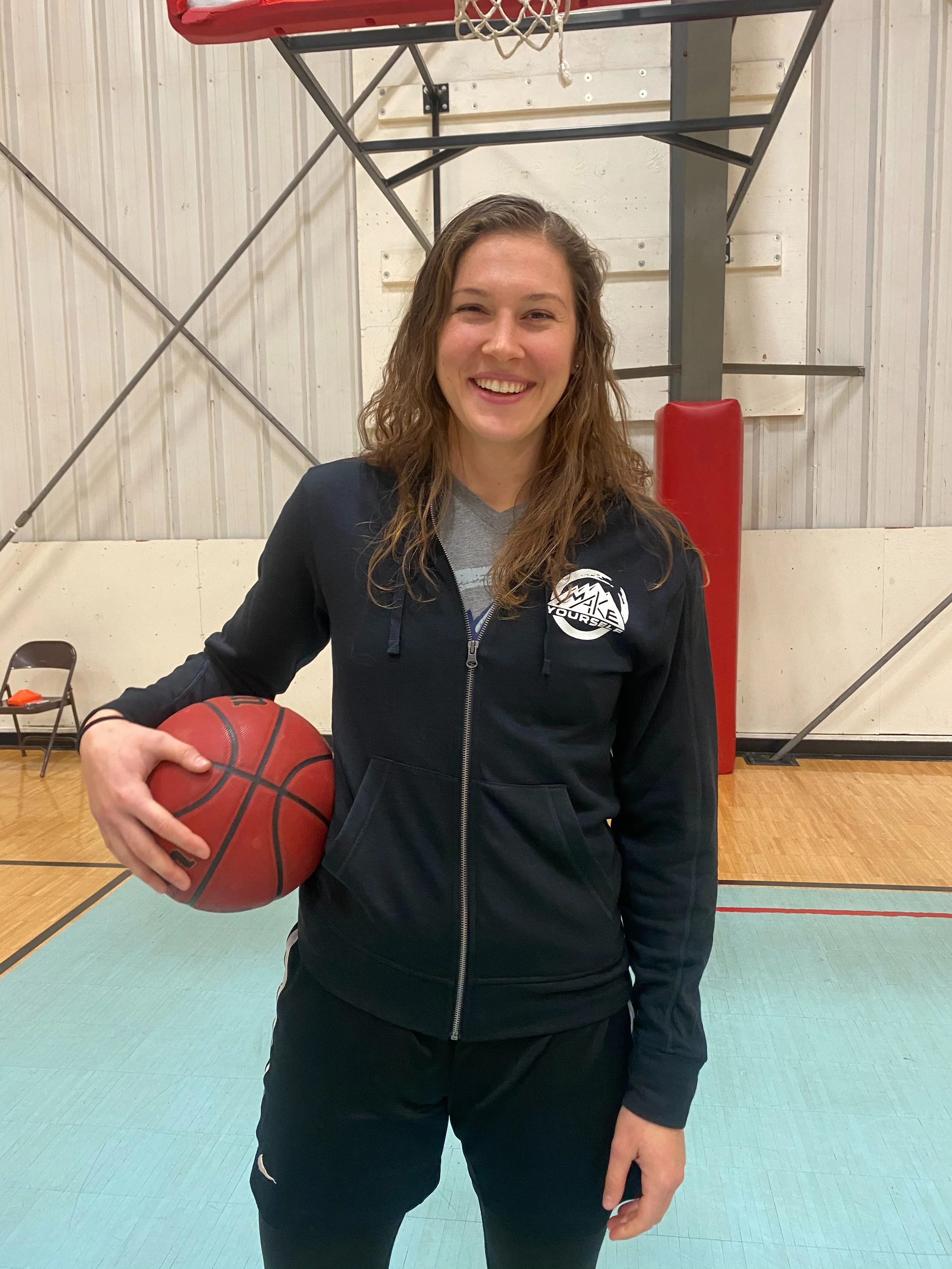
Alysa Horn
is a Certified Strength & Conditioning Specialist and Basketball Player Development Coach in Alaska with over a decade of experience working with athletes. She is also a former professional basketball player and owner of the Sweat Lab, a gym in Anchorage.
REFERENCES
1 Pierce, K. C., Hornsby, W. G., & Stone, M. H. (2022). Weightlifting for children and adolescents: A narrative review. Sports health. https://pmc.ncbi.nlm.nih.gov/articles/PMC8669931/#bibr47-19417381211056094
2 Jansson, D., Lindberg, A.-S., Lundberg, E., Domellöf, M., & Theos, A. (2022, June 21). Effects of resistance and endurance training alone or combined on hormonal adaptations and cytokines in healthy children and adolescents: A systematic review and meta-analysis. Sports medicine - open. https://pmc.ncbi.nlm.nih.gov/articles/PMC9213633/#Sec12
3 Martin, J. (n.d.). Should kids lift weights?. The Ready State. https://thereadystate.com/blogs/should-kids-lift-weights/
4 Specker, B., Thiex, N. W., & Sudhagoni, R. G. (2015, November). Does exercise influence pediatric bone? A systematic review. Clinical orthopaedics and related research. https://pmc.ncbi.nlm.nih.gov/articles/PMC4586223/#Sec9
5 Levín Catrilao, Á., Parada-Flores, B., Aravena-Sagardia, P., Vásquez-Carrasco, E., Hernandez-Martinez, J., Caamaño-Navarrete, F., Arriagada-Hernandez, C., Sandoval, C., Herrera-Valenzuela, T., Branco, B. H. M., & Valdés-Badilla, P. (2025, November 2). Effects of body weight strength training on cognitive function and quality of life in healthy older people: A systematic review of randomized controlled trials. Life (Basel, Switzerland). https://pmc.ncbi.nlm.nih.gov/articles/PMC12653723/