Pain, The Body’s Security System: What to do when it’s on the fritz
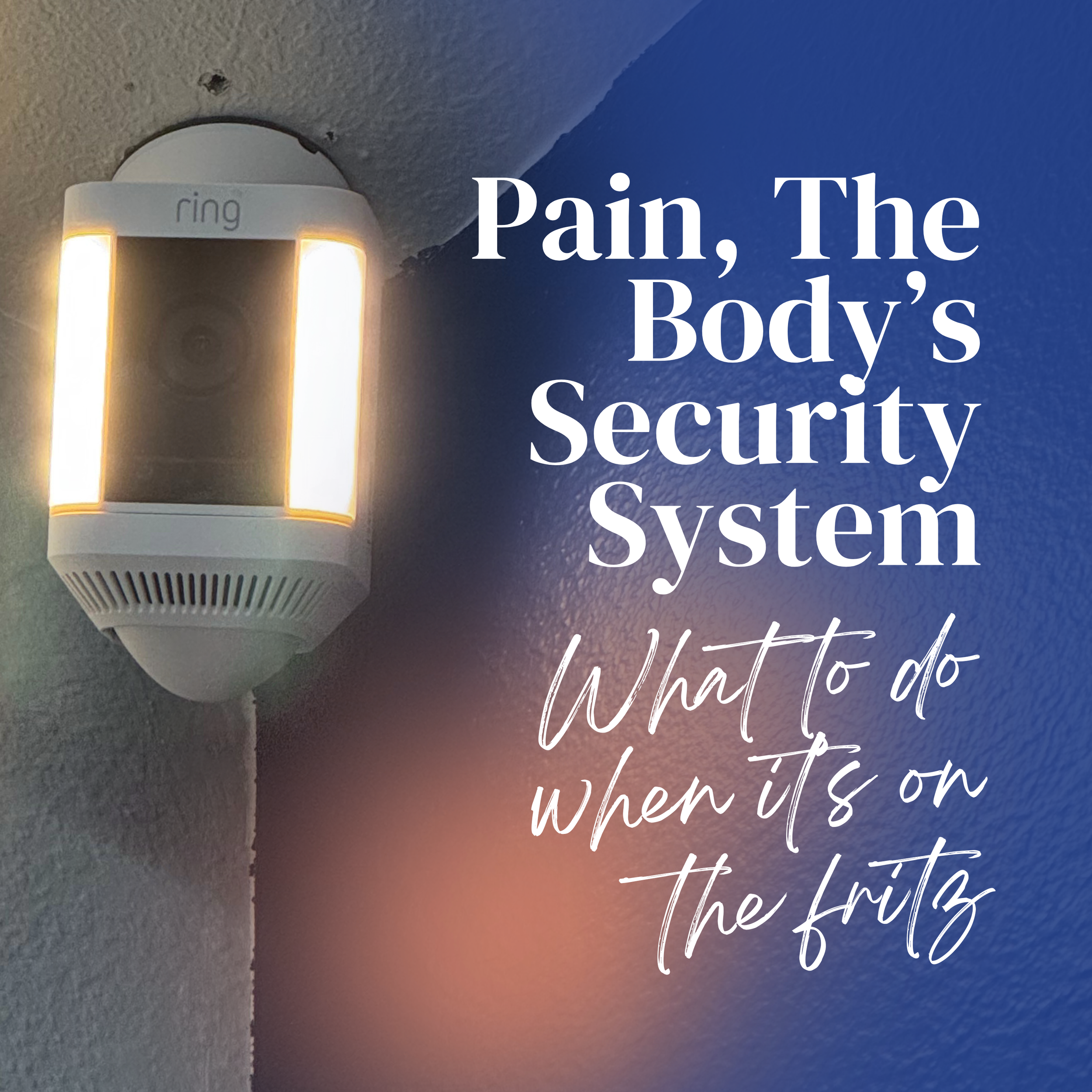
When you move into a house these days, the first thing most people do is look at the security set up. Perhaps they end up changing the locks, installing a new alarm system, putting up a fence to make sure the dog doesn’t get out.
And in terms of priority?
We often do that before we make any other changes to a new home, because as a basic human need, we are comforted by the insurance of safety.
Did you know, our bodies have a set of alarm systems that different parts of our body use to keep us safe and healthy?
Your Body’s Alarm System: Pain
Imagine this, or perhaps recall a time when you were out for a walk and had the misfortunate of stepping awkwardly. Your body capitulates to gravity and the side of your ankle saves you from face planting on the ground. Your face has survived a devastating sucker punch from Earth, but your ankle wasn’t so lucky.
This acute injury triggers pain receptors in your ankle to send messages to the brain that it’s not doing well, similar to the alarm system in your house going off to let you know that someone is trying to steal your Amazon package off your porch.
Over the next few days, your body is hard at work undergoing the healing process to turn off the alarm bells by itself, and the pain slowly begins to dissipate.
We expect our body to respond this way because the healing process is part of our body’s typical response, and we know we can just wait for it to figure it out on its own akin to your home’s security system automatically calling the cops to get this package stealing lunatic away from your front door.
When The alarm rings and it’s less beyonce and more jay z
Second scenario, you’re at home in the kitchen cooking dinner, or laying in your bed, or even taking care of business in the bathroom.
All of a sudden, all the alarms start blaring in your house. Smoke detectors, security system, kitchen appliances, alarm clocks, you name it, they are blaring. It is loud, overwhelming, and a real pain in the butt. It would startle you, right? And what would you want to do?
If an alarm was going off at our house, we would first look for danger, and then we would do anything that we could in order to turn it off.
This is what your body does with a chronic situation that could then become alarmingly painful. You can be minding your own business and then sneeze, jerking your L4 vertebral disc into a splooged position onto your sciatic nerve. The pain radiating from the sciatic nerve finally notifies our body that something is wrong.
The problem in this scenario is that we didn’t address our pain responses early on enough.
There were warning signs that your low back was in a less than optimal state, but it took all the alarms going off all at once to finally get your attention. I know I’m not the first person who has ignored the beeping for food in the microwave when it’s finished heating up or has tried to sleep through the 1am smoke detector chirp.
When we ignore pain, it’s as if the smoke detector chirp turns into an actual alarm or the beep of the microwave gets louder and more sustained. The response (beep) doesn’t match the stimulus (smoke detector battery is dead of microwave is done heating your meal). And it’ll only keep getting louder if we keep ignoring it.
The Alarm Bells That Are Easy to Ignore Accidentally
A third scenario can also arise. In this analogy, your security camera notifies you something is wrong only for you to check and discover that it was actually a falling leaf or the neighbor’s cat. Neither of these are inherently harmful (unless the cat is using your flower bed as it’s literbox again) and our bodies have a similar response when they’re dysregulated.
An itchy shirt is now causing pain, demonstrating a stimulus and response that don’t match in severity.
Spending time working on activities that ramp down your nervous system take the alarms that are blaring, and turn the volume down on them. These may include:
Sitting in a quiet room (no music, no TV, no book, no talking)
Going outside and spending time in fresh air
Engaging another sensory system (smell, taste, feeling) by cooking a new recipe or taking a warm bath
And of course, one of the best ways to dysregulate your itchy nervous system is by exercising! Every time you hit the gym is an opportunity to turn down the dial on your nervous system’s response to pain and make sure that the alarm intensity matches what it’s responding to.
When the Alarm Didn’t Work
Finally, in a fourth scenario, your house has a gas or CO2 leak. Terrifying. Within your body there is also the risk of silent killers that don’t always sound the alarm and we don’t know there’s a problem until it’s too late.
In the body, these are the silent killers:
A sedentary lifestyle
Not participating in activities that make you happy
An unbalanced diet
Stress
As Elle Woods in Legally Blonde says, “Exercise gives you endorphins. Endorphins make you happy. Happy people don’t shoot their husbands”.
Now, this is a very specific activity, but imagine this - “happy people don’t ________”.
What would you fill in the blank with?
If you’re looking for inspiration, here’s some things I’d choose:
Happy people don’t become quick to anger. They’re more patient, understanding, and even keel.
Happy people don’t avoid exercise because they’re tired. They choose exercise because they know that it improves their mood, their nervous system, and their overall state of health!
Happy people don’t procrastinate. They’re ready to tackle challenges ahead, even if they don’t know exactly how. It’s not scary, it’s just new.
Well, maybe happy people would sometimes do these things, but in general, they’re able to live a much better and healthier life, thwarting the silent killers.
So, what can you do?
Keep an eye on your nervous system. If it feels like everything is raising alarms (you’ve been there, everything is a major inconvenience, nothing is going your way), you probably need to ramp down your nervous system. Allow the alarms to be recalibrated to protect the house from appropriate threats.
Protect your house - get exercising! The best thing you can do for yourself is moving your body. Start small but be consistent - your body will thank you!
Do things that make you happy. And do things that make you happy with others that make you happy! Sharing in exercise & happiness helps protect your nervous system.

About the Author
Sam Fox is an Alaska grown exercise enthusiast with a doctorate in Physical Therapy. She is also certified in dry needling and Graston Technique.
An elite swimmer during her athletic phase of life, she can now be found cuddling her baby son, Cooper, on her days off from Providence Hospital or helping clients through her business Breakout Physical Therapy & Wellness.